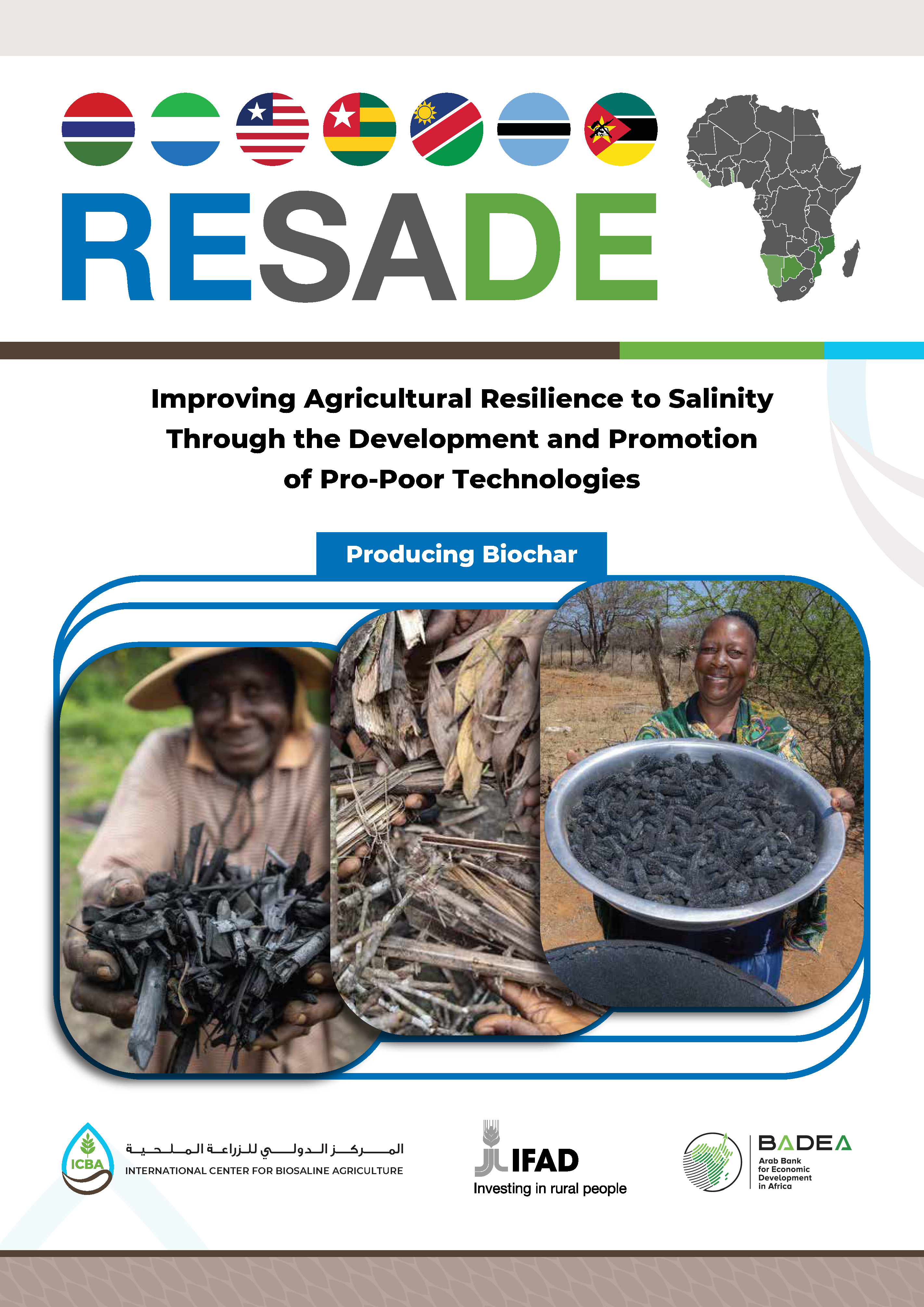
The RESADE project Improving Agricultural Resilience to Salinity through the Development and Promotion of Pro-Poor Technologies and Management Strategies in Selected Countries of Sub-Saharan Africa operates in seven countries. The RESADE project provides customized agronomic strategies tailored to saline environments. These strategies include innovative crop management methods and efficient irrigation techniques, such as various irrigation systems and improved soil management practices. Notably, the use of soil amendments such as biochar helps decrease further salinization while also increasing crop productivity.
Biochar is a carbon-rich material produced through the pyrolysis of organic biomass in an oxygen-free environment. This training handout offers an overview of the principles, environmental benefits, and practical steps involved in biochar production, emphasizing its importance in enhancing agricultural resilience, particularly in saline and degraded soils. It outlines the necessary materials, unit design, biomass selection, and the pyrolysis process, while also addressing environmental considerations and safety protocols. This document serves as a practical guide for farmers, technicians, and development practitioners seeking to implement sustainable soil management practices, thereby contributing to climate change mitigation through carbon sequestration and enhanced soil health.